We started this school year with some review and we need a refresher lesson on making nouns plural. I found some great printable rules but I wanted a worksheet for my youngest to do that combined the rules with her putting in some of the information because she is a fast reader and I wanted to make sure that she actually processed the information. So I created this freebie to share:
You can grab it here and if you like this, please leave a comment here or a rating in my shop!
Showing posts with label Freebies. Show all posts
Friday, September 25, 2015
Friday, September 4, 2015
Friday Freebie-Multiplication Cut and Paste
Both kids had birthdays last weekend and then we had a week long visit from my dad/Grandpa Florida which meant my computer time was minimal. In fact, the last minute trip also jumped in the way of my plans to get the school year planning done early, so I had to whip out a quick cut and paste multiplication sheet to share. The rest of this weekend will be spent buried in planners and curriculum as I prepare for our Tuesday start date, so the next couple of Friday Freebies will be recommendation to handy freebie sites (worksheets and worksheet generators) while I get settled into our new year. For now though, you can grab the worksheet I made today
here.
If you like this, please leave a comment here or a rating in my shop!
here.
If you like this, please leave a comment here or a rating in my shop!
Friday, August 21, 2015
Friday Freebie-Cut and Paste Soft and Hard G
This week's freebie is a cut and paste worksheet for reinforcing soft and hard g words. This worksheet is ideal for practicing the skill once it has been learned or just paired with a quick lesson. You can grab the freebie here and if you like it, please let me know on my blog or on the Teachers Pay Teachers site.
Friday, August 7, 2015
Friday Freebie-Cut and Paste Soft and Hard C
This week's freebie is a cut and paste worksheet for reinforcing soft and hard c words. This worksheet is ideal for practicing the skill once it has been learned or just paired with a quick lesson. You can grab the freebie here and if you like it, please let me know on my blog or on the Teachers Pay Teachers site.
Friday, July 31, 2015
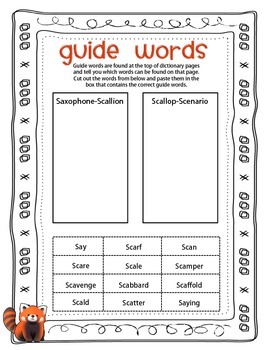
Friday Freebie-Guide Words
This week's freebie is a mini packet great for introducing or reinforcing dictionary guide words. There is an option to cut and paste the words in the correct box or a page for writing the words in their appropriate space. This is a preview of a packet that will be available in my Teachers Pay Teachers shop that will include more practice pages in one file. You can grab the freebie here and if you like it, please let me know on my blog or on the Teachers Pay Teachers site.
Saturday, July 18, 2015
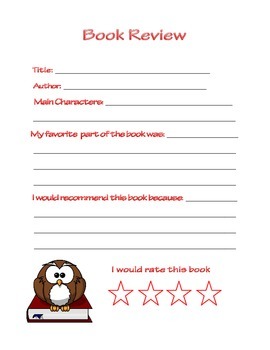
Friday Freebie-Book Review
I love the format of a book review because it is a great transition into traditional reports. If I asked my son to write a paragraph format report on a book, I would get handed a page of choppy and weak sentences. I could practically hear him calculating the least amount of words possible to complete the assignments. With book reviews, the questions serve as prompts and since I was asking him to share his opinion, he focused more on content and less on how to evade long sentences. I created this early stage review with emphasis on identifying main characters and included spaces for writing sentences that are opinion based rather than a detailed discussion of plot elements. Once he mastered this one, I was able to transition him to more detailed report templates and then eventually to paragraph format reports. You can grab the freebie here and if you like it, please let me know on my blog or on the Teachers Pay Teachers site.
Friday, July 10, 2015
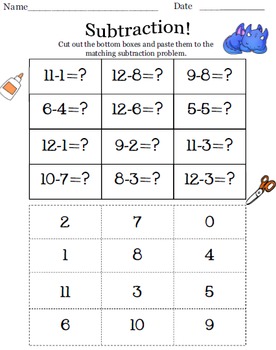
Friday Freebie-Subtraction Cut and Paste
This week has been a busy week with journeys into the woods, their weekly all vacation bible school, and a trip to the water park, so my blog time was nonexistent. As a result, my freebie this week is a short 2 page subtraction cut and paste activity that I finally uploaded this morning. I'm hoping that this week is a little more calm so that I have time to make some more curriculum, write some blog posts, and begin planning for our school year. The way summer is flying, I am wondering how much I can get done! You can grab your worksheets here.
If you like this, please leave a comment here or a rating in my shop!
Friday, July 3, 2015
Friday Freebie- Cut and Paste Synonyms and Antonyms
Here's another freebie from my shop! The hardest thing for me to find during searches for free material were cut and paste activities. So I made a lot of my own for the kids to use and now I'm working on adding a bunch of this style of worksheet to my collection. You can grab the freebie here and if you like it, please let me know on my blog or on the Teachers Pay Teachers site.
Sunday, May 24, 2015
My Folder System
Homeschooling one kiddo was fairly interesting and required some prep work, but when I added kid #2 into the mix, I realized that I'd need to be a lot more organized. So I did what any sane person would do. I plunged into a season of trial and error. And it was so fun that I spent lots of hours on the internet and at least a year of testing stuff out to figure out what would work for keeping us on track. So if you are on a similar journey, here's something to add to the overflowing list of homeschool planning solutions. I call it the folder system (for lack of a creative term).
When I started the process, it was mid year. My first advice to anyone trying this out is to stock up on 3 prong pocket folders during back to school time when they are an average of 15¢ each. In the dead of winter I coughed up about 45¢ each. I was desperate to get organized though so I grabbed the bare minimum needed to get started--5 for each kid. When the next discounts came along, I got about 30 folders because they can get lost or mangled during the school year and I wanted extra on hand for filing special projects or storing theme materials.
Once you have your folders, label each one Monday, Tuesday, etc for each day you do school during the week. If I had done this in kindergarten and first grade years, I would have labeled it by numbers since we only did 3 or 4 days a week and I picked the days that worked best with our schedule and level of cooperation I was getting out of my spirited child. Next, I do my lesson planning for the week and put any worksheets in the left-hand side of the folder. Any book or workbook assignments get written on the folder assignment sheets that I made. In order to save paper, there are two days per page and you just have to cut it in half. Once the child completes the work, it goes to the right side of the folder and into their "to be graded" rack.
You can snag the printable pdf here.
When I'm feeling super organized, I will do two weeks of lesson planning at once and just paper clip the next week's assignments by day and stick it in a file folder. Another option is to get enough folders to have two weeks ready per child. Maybe next year I'll be that organized. I also prefer to do a different color for each day and my slightly compulsive self tends to go in rainbow order. Once again, it's all about personal preference at this point. Then I put all the folders and necessary books in each child's backpack and they are ready for a full week.
Here are some advantages to the folder system--
Some kids seem to do better if they know what is expected each day. My oldest child hated not knowing how much work was left after he completed one of his assignments.
If one of my kids wants to get their work done early, they have the option to work ahead on other folders (as long as the work isn't rushed or sloppy).
When I have their work put in folders, I am able to compare and see which days have heavy writing or math and switch assignments around so that the daily work is balanced.
I can compare each child's assignments to see which things I can expect the kids to work on independently and which things will need lots of one on one time. I try to alternate days based on that for my own sanity.
This folder system is the only one that has lasted in my family for longer than a few months, so I figured I'd share this organizational style in case it could help anyone else. And if not, there are at least 1000 more ways to lesson plan and organize your homeschool world. Happy planning!
When I started the process, it was mid year. My first advice to anyone trying this out is to stock up on 3 prong pocket folders during back to school time when they are an average of 15¢ each. In the dead of winter I coughed up about 45¢ each. I was desperate to get organized though so I grabbed the bare minimum needed to get started--5 for each kid. When the next discounts came along, I got about 30 folders because they can get lost or mangled during the school year and I wanted extra on hand for filing special projects or storing theme materials.
Once you have your folders, label each one Monday, Tuesday, etc for each day you do school during the week. If I had done this in kindergarten and first grade years, I would have labeled it by numbers since we only did 3 or 4 days a week and I picked the days that worked best with our schedule and level of cooperation I was getting out of my spirited child. Next, I do my lesson planning for the week and put any worksheets in the left-hand side of the folder. Any book or workbook assignments get written on the folder assignment sheets that I made. In order to save paper, there are two days per page and you just have to cut it in half. Once the child completes the work, it goes to the right side of the folder and into their "to be graded" rack.
You can snag the printable pdf here.
When I'm feeling super organized, I will do two weeks of lesson planning at once and just paper clip the next week's assignments by day and stick it in a file folder. Another option is to get enough folders to have two weeks ready per child. Maybe next year I'll be that organized. I also prefer to do a different color for each day and my slightly compulsive self tends to go in rainbow order. Once again, it's all about personal preference at this point. Then I put all the folders and necessary books in each child's backpack and they are ready for a full week.
Here are some advantages to the folder system--
Some kids seem to do better if they know what is expected each day. My oldest child hated not knowing how much work was left after he completed one of his assignments.
If one of my kids wants to get their work done early, they have the option to work ahead on other folders (as long as the work isn't rushed or sloppy).
When I have their work put in folders, I am able to compare and see which days have heavy writing or math and switch assignments around so that the daily work is balanced.
I can compare each child's assignments to see which things I can expect the kids to work on independently and which things will need lots of one on one time. I try to alternate days based on that for my own sanity.
This folder system is the only one that has lasted in my family for longer than a few months, so I figured I'd share this organizational style in case it could help anyone else. And if not, there are at least 1000 more ways to lesson plan and organize your homeschool world. Happy planning!
Tuesday, April 14, 2015
Fact Families
When I saw my first fact families problems, I must admit that I had to google to understand what they were asking. Once I figured it out, I loved using these for my oldest when he was learning addition and then again for multiplication. I haven't needed them again until recently when my daughter started having a hard time memorizing her multiplication facts, so I created some for drills with her. I favor the visual triangle over the text only problems that sent me googling, so I opted to go that route. Basically you have three numbers in a triangle and you fill in the combinations so that the number sentences make sense.
Here's an example:
For this problem, the answer would be 4+8=12; 8+4=12; 12-4=8; 12-8=4. For problems with multiplying and dividing, the steps are the same but with the different operations.
I have a 3 page set of addition and subtraction triangles here and a 3 page set of multiplication and division here. I have left the final page blank so that you can fill in your own numbers, especially as you discover areas where extra practice is needed. I hope these are helpful!
Here's an example:
For this problem, the answer would be 4+8=12; 8+4=12; 12-4=8; 12-8=4. For problems with multiplying and dividing, the steps are the same but with the different operations.
I have a 3 page set of addition and subtraction triangles here and a 3 page set of multiplication and division here. I have left the final page blank so that you can fill in your own numbers, especially as you discover areas where extra practice is needed. I hope these are helpful!
Tuesday, February 3, 2015
Weekly Reading Sheet
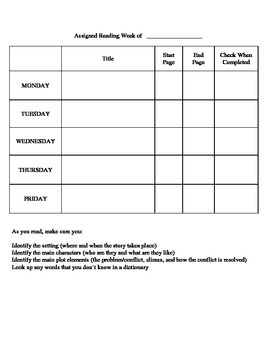
We do a lot of free reading in our house, but I also like to assign daily reading assignments. This ensures that more than graphic novels are being read. This table has the days of the week, page start, page end, and a place to check off when they are done, and then I put this page in their weekly planner. There is also a list at the bottom with reminders of what the kids should be looking for as they read.
Grab the freebie here .
Tuesday, July 5, 2011
Simple Machines are done!
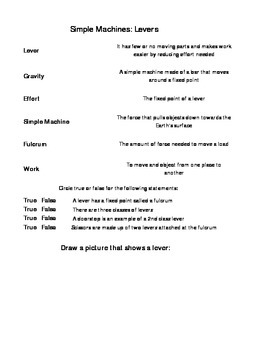
Well, summer hit us and we got busy. So we took a break before tackling levers and I finally finished the levers worksheet today. Then i also had a great brainstorm about combining pdfs to make a multipage download instead of having to download each part individually :) So here is the link to the 6 worksheets all in one file and here is the link to the corresponding answer sheets.
The books that I used for this lesson came from my library and they were a great series written by Kay Manolis. They are a colorful and easy to understand set of books (which is helpful since I knew next to nothing on simple machines) and I really recommend this series for early readers. The books are easy to find if you google BlastOff Readers: Simple Machines by Kay Manolis.
Monday, February 21, 2011
Homemade Base 10 Cubes
It was time to learn place values and I wanted a hands-on manipulative to use. I could have bought them for around $15 dollars but since we are homeschooling on a tight budget, I decided to make my own set. I used photoshop to make the basic squares and I also saved it as a pdf so that I could share it with others. Once I printed the different squares, I laminated them and attached small squares cut from my magnet roll to the top and bottom of each piece. Now we can use them on our magnet dry erase board. And since I used materials that I already had on hand, I didn't need to puchase additional items. If you don't have a laminator, you can use contact paper to preserve your cut pieces. I've uploaded the files of the master copies for your personal use. Here is the link for the first one, and here is this link for the second sheet.
Subscribe to:
Posts (Atom)